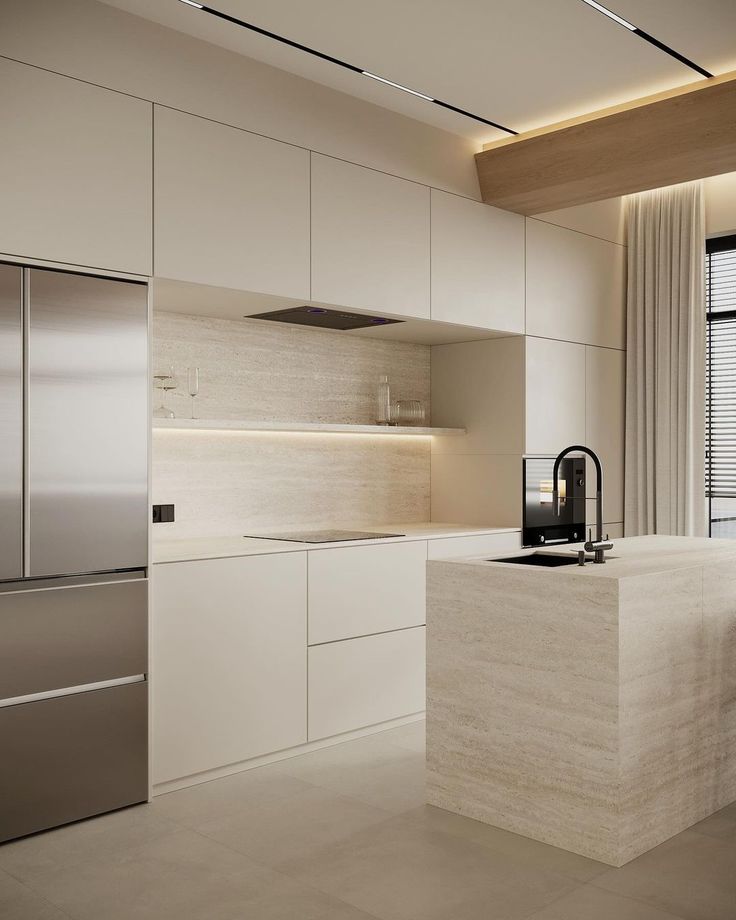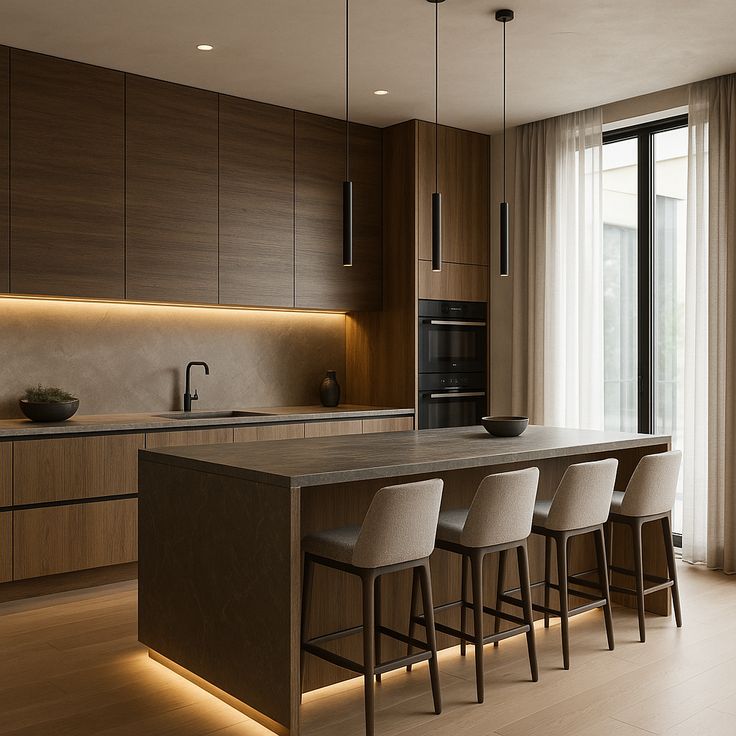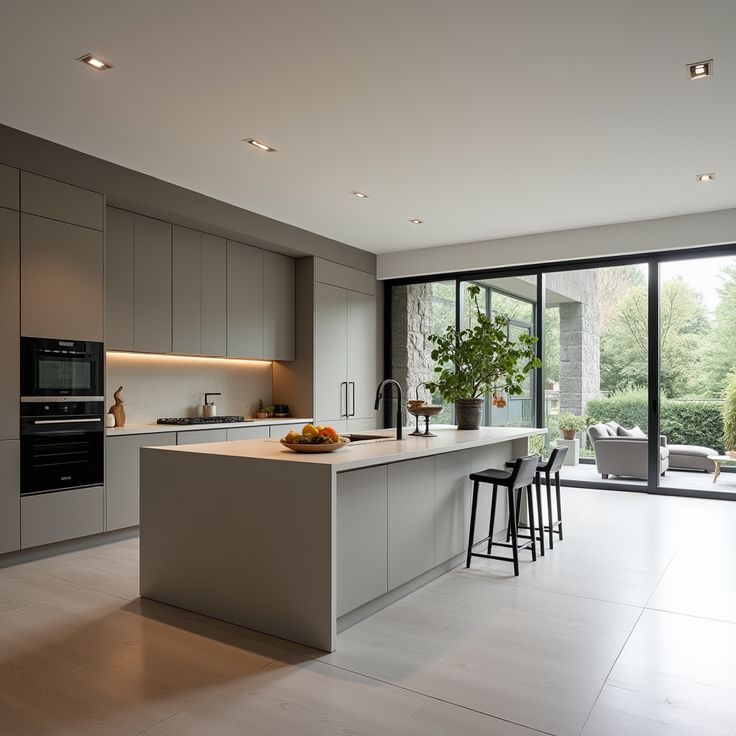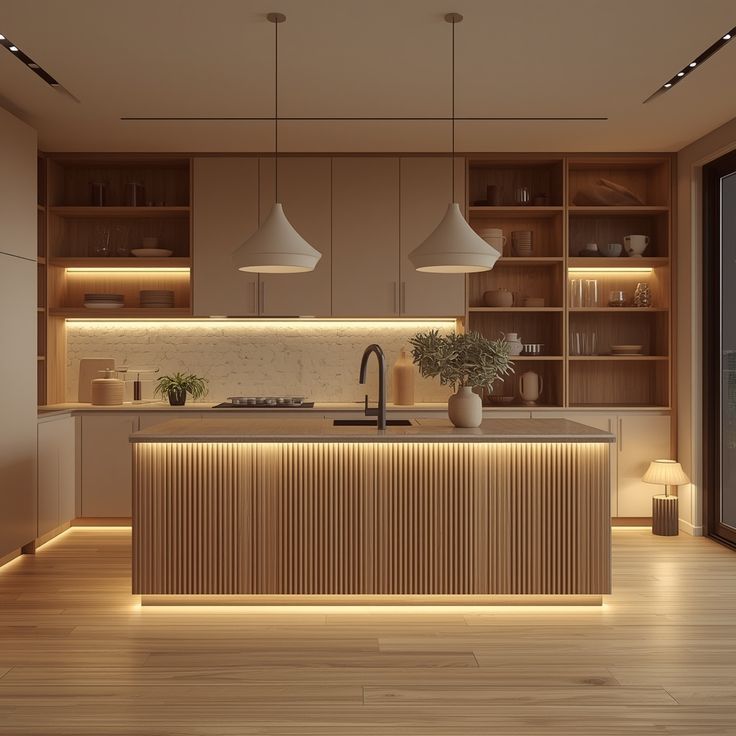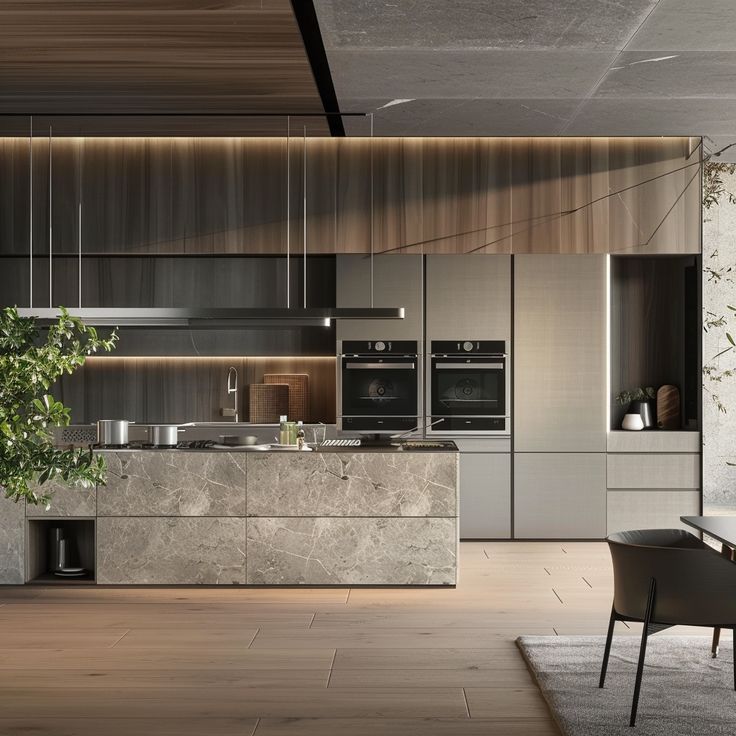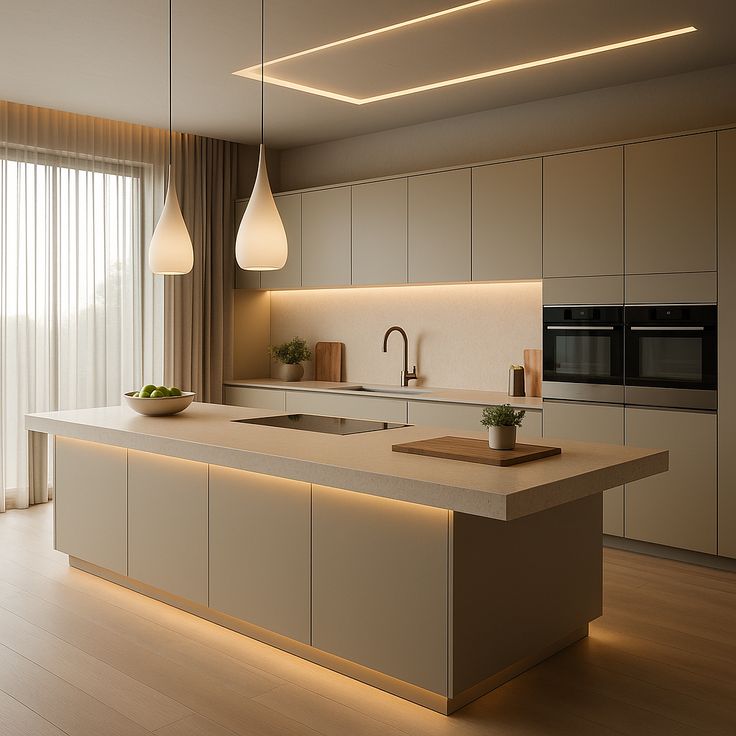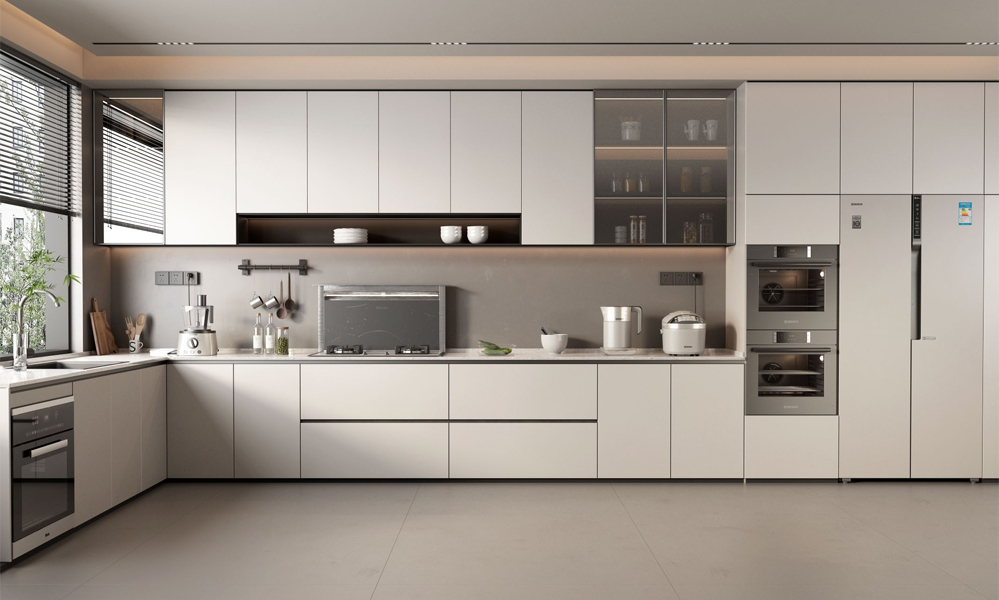
1. What is a UV kitchen cabinet finish?
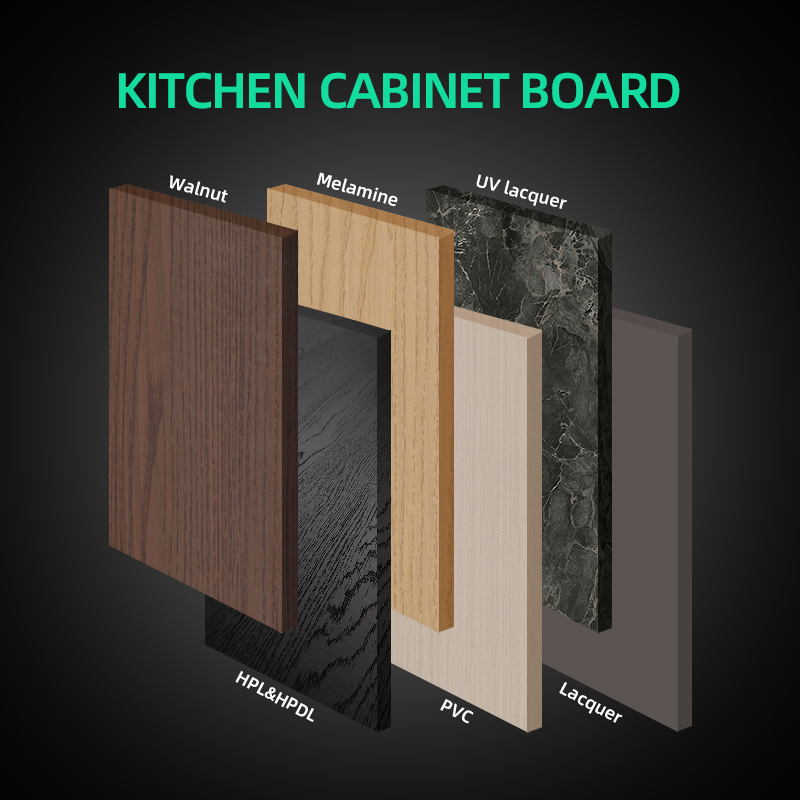
A UV finish is one of the most common Kitchen Cabinet Finishes for modern projects. It’s a coating cured with ultraviolet light on top of a board (usually MDF or particle board). UV Kitchen Cabinet Finishes typically offer:
High-gloss or semi-gloss appearance
Good surface hardness and scratch resistance
Bright, clean color for modern kitchens
UV Kitchen Cabinet Finishes are popular in modern apartments and developer projects where you need a sleek look and controlled costs.
2. What is a PET kitchen cabinet finish?
PET is a film-based option within modern Kitchen Cabinet Finishes. A PET finish uses a PET (polyester) film laminated onto the board with hot-melt or PUR glue. Key features of PET Kitchen Cabinet Finishes:
Available in high-gloss and super-matte (low-reflection) options
Smooth, refined surface with good scratch and stain resistance
Very suitable for handleless and minimalist kitchen designs
PET Kitchen Cabinet Finishes are widely used in mid- to high-end apartments, villas, and design-driven developer projects.
3. What are painted (lacquer) kitchen cabinets?
Painted (lacquered) Kitchen Cabinet Finishes are created by spraying multiple coats of primer and topcoat onto a prepared board and then curing. Advantages of painted Kitchen Cabinet Finishes include:
Almost unlimited color choices
Available in matte, satin, or high-gloss
Capable of achieving very premium, “bespoke” looks
These Kitchen Cabinet Finishes are common in luxury villas, high-end apartments, and flagship or show units in developer projects.
4. Which finish is most scratch-resistant: UV, PET, or painted?
In day-to-day use, scratch resistance across Kitchen Cabinet Finishes generally ranks like this:
PET usually offers the best overall scratch resistance, especially super-matte PET.
UV has a hard surface, but high-gloss UV can show scratches and fingerprints more easily.
Painted durability depends heavily on the paint system and process; high-quality lacquer is strong, but deeper scratches are harder to repair.
For rental apartments and high-traffic projects, PET or UV Kitchen Cabinet Finishes are usually the safer choice from a durability perspective.
5. Which finish is best for high-gloss modern kitchens?
For high-gloss Kitchen Cabinet Finishes in modern kitchens:
UV high-gloss: Strong reflectivity, clean modern look, cost-effective for large apartment or developer projects.
PET high-gloss: Finer, more “refined” surface and touch, ideal for mid- to high-end apartments and villas.
High-gloss painted: Visually the most luxurious but also the most demanding in process and cost—often reserved for premium villas and top-tier units.
If you’re doing large-scale modern apartments, UV or PET high-gloss Kitchen Cabinet Finishes are usually more practical.
6. Which finish looks and feels most premium for villas and luxury homes?
For villas, townhouses, and luxury homes, the most premium Kitchen Cabinet Finishes are typically:
Matte or satin painted cabinets, which deliver a bespoke, high-end feel and allow exact color matching to the interior palette.
Super-matte PET, which offers a very luxurious, soft-touch surface with better fingerprint resistance and easier maintenance than many lacquers.
A common Kitchen Cabinet Finishes strategy is to use painted or super-matte PET on the island or feature area, and PET/UV on perimeter cabinets to balance cost and performance.
7. Which finish is more suitable for apartments and rental units?
For standard apartments, rental units, and investment properties, practical Kitchen Cabinet Finishes are:
PET: Durable, easy to clean, and resistant to stains and fingerprints (especially anti-fingerprint PET).
UV: Sharp, modern look with very competitive pricing, ideal for mass-produced developer projects.
Painted: Better for owner-occupied, higher-end apartments where users are more careful and want a premium look.
Developers who need a strong balance of appearance, cost, and durability often standardize on UV or PET Kitchen Cabinet Finishes for most units.
8. How do UV, PET, and painted finishes compare in color stability and yellowing?
Color stability is a key factor when comparing Kitchen Cabinet Finishes:
PET generally has the best long-term color stability and resistance to yellowing.
UV finishes can perform well if high-quality coatings are used, but lower-end systems may show some discoloration over time.
Painted finishes—especially whites and creams—can yellow if the paint system or environment (strong sunlight, heavy cooking) is not well controlled.
For large developer projects where future replacement and color matching matter, PET and good-quality UV Kitchen Cabinet Finishes are often safer standard choices.
9. Which finish is easiest to clean and maintain for everyday use?
Maintenance is central when choosing Kitchen Cabinet Finishes:
PET cabinets: Very user-friendly; resistant to stains and easy to wipe with a soft cloth and mild cleaner. Anti-fingerprint PET is ideal for busy families and rentals.
UV cabinets: Smooth, non-porous surfaces are easy to clean. High-gloss UV will show fingerprints and water marks more clearly but wipes clean quickly.
Painted cabinets: Also cleanable with mild products, but harsh chemicals and aggressive scrubbing should be avoided to protect the paint film.
For high-turnover projects, PET and UV Kitchen Cabinet Finishes tend to be lower-maintenance options.
10. Are UV, PET, and painted Kitchen Cabinet Finishes all suitable for humid climates?
Yes—if the construction is correct. For humid climates, the performance of Kitchen Cabinet Finishes depends not only on the surface but also on:
The core board (e.g., moisture-resistant particleboard or plywood)
Proper edge banding and sealing
Protection around sinks and water sources
All three Kitchen Cabinet Finishes—UV, PET, and painted—can perform well in humid regions when paired with the right substrate and detailing. For coastal apartments or very humid areas, many developers use moisture-resistant boards with PET or UV for extra stability.