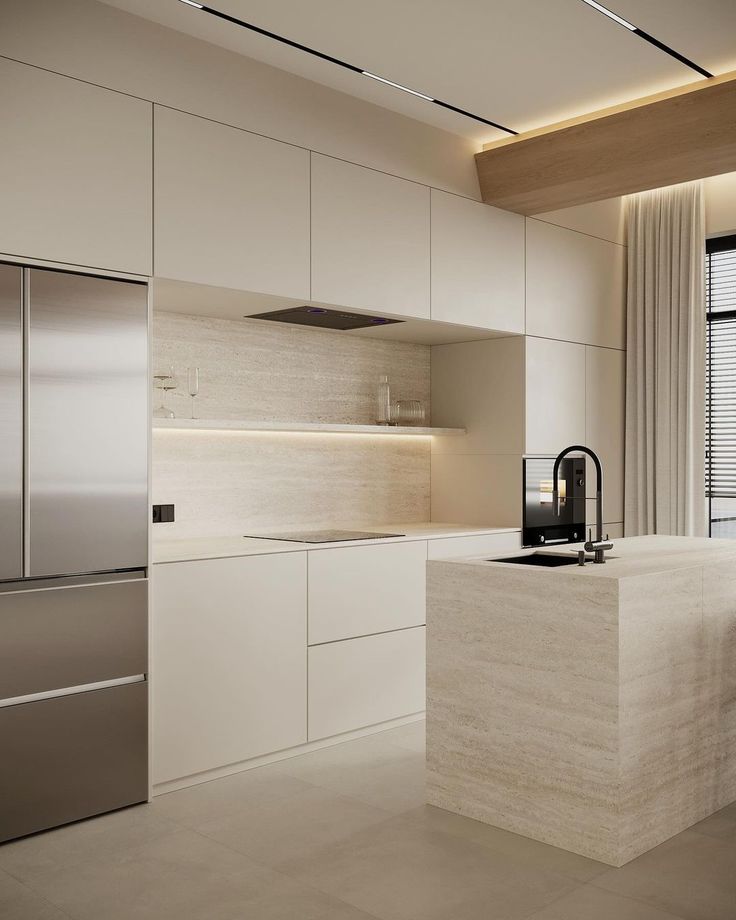
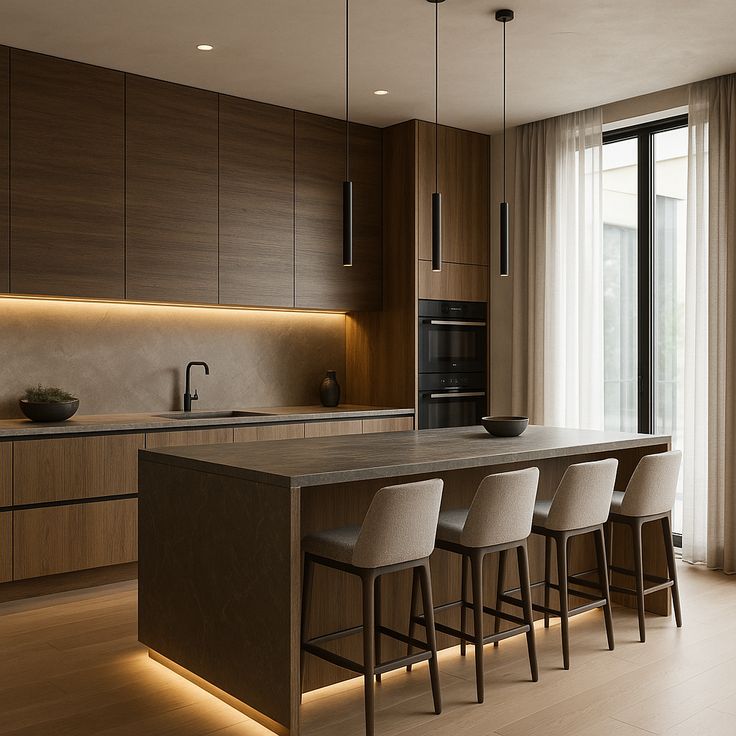
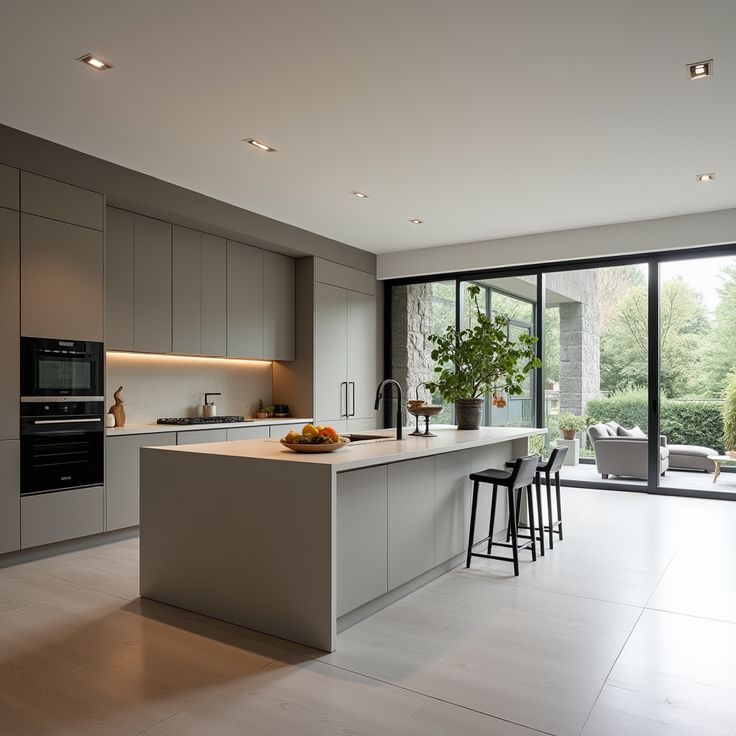
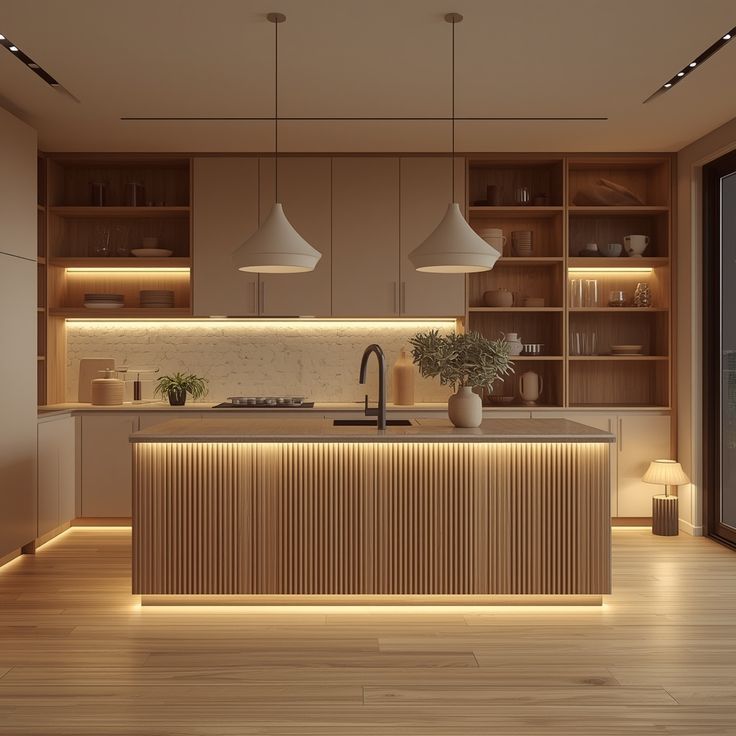
AIS Kitchen Furniture Automated Production Lines
Introduction
In today’s competitive kitchen cabinet industry, an Kitchen Furniture Automated Production Lines is the backbone of large-scale, high-precision manufacturing. By integrating advanced machinery and intelligent workflow management, we can handle bulk orders without compromising on quality.
Step 1: Raw Material Input & Preparation
The quality of a modular or custom kitchen cabinet starts with the raw materials. At AIS, we ensure every panel meets export-grade standards right from the beginning.
1. Material Selection & Pre-Inspection
Before entering production, all core materials—such as MDF, plywood, particleboard, and HDF back panels—undergo strict inspection. Each batch is checked for:
1、Moisture content stability (to prevent warping or swelling later)
2、Surface flatness and smoothness
3、Thickness tolerance accuracy
4、Formaldehyde emission compliance (E0 / CARB Phase 2 / FSC-certified options available)
5、Core density and bonding strength
High-quality hardware components (hinges, drawer slides, connectors) are also inspected to ensure they meet durability and finishing standards.
2. Automated Sorting & Digital Traceability
Once approved, materials are sorted by type, thickness, and project batch. Using an automated scanning system, every board is tagged with a QR code or barcode. This enables:
1、Full traceability throughout cutting, drilling, and assembly
2、Accurate matching with digital production drawings
3、Easier defect tracking and replacement
4、Reduced material waste and production errors
Step 2: CNC Precision Cutting & Precision Sizing
Once materials are fully prepared and tagged, they move into the CNC processing stage—this is where factory-level precision sets modular and export-grade cabinets apart from traditional manual carpentry.
1. Digital Design-to-Machine Integration
Each panel is processed based on a 3D design file or BOQ layout from the engineering team. The CNC machine receives exact measurements and cutting paths, ensuring:
1、Consistent sizing for all modules
2、Zero human measurement error
3、Perfect alignment for later assembly
4、Optimized nesting to reduce material waste
2. High-Precision CNC Cutting
Using advanced CNC routers or panel saws, each board is cut into cabinet parts such as:
1、Side panels
2、Bottom/base panels
3、Drawer fronts
4、Shelves and backing sections
5、Custom shapes for L-shaped or U-shaped layouts
Cutting accuracy is typically kept within a ±0.2 mm tolerance, ensuring seamless fit during assembly.
3. Edge Optimization & Labeling
Once cut, each piece is automatically labeled with a QR code or assembly number for easy identification in later processes. This improves workflow efficiency and prevents mixing between different orders—especially for bulk project production.
4. Why CNC Cutting Matters
This machining step ensures every piece is perfectly aligned and ready for seamless assembly, which:
1、Improves structural integrity
2、Reduces installation time on-site
3、Enhances cabinet stability and appearance
4、Ensures all doors align evenly with tight gaps
Step 3: Edge Banding
After CNC cutting, each cabinet component is transferred to the edge banding line, where exposed edges are sealed for durability, moisture resistance, and improved appearance. This is a crucial process that determines the cabinet’s long-term performance and overall finish.
1. Laser Edge Banding (For Premium Export & High-End Projects)
For high-end residential, commercial, or overseas projects requiring seamless finishes, we use laser edge banding machines:
1、Creates a zero-joint finish, almost invisible to the eye.
2、Ensures 100% waterproof edge sealing—ideal for areas near sinks or dishwashers.
3、Enhances durability by preventing edge peeling over time.
4、Offers superior resistance to steam, heat, and daily wear.
5、Preferred for luxury matte finishes, acrylic, PET, lacquered, and super gloss panels.
Best for: Premium villas, show homes, hotels, luxury apartments, and high-humidity regions.
2. Hot Melt Edge Banding (For Standard & Budget-Friendly Orders)
For mid-range and project-volume orders, we use hot melt EVA or PUR glue edge banding:
1、Offers reliable adhesion with strong bonding.
2、A cost-effective solution without compromising functionality.
3、Suitable for MDF, particleboard, plywood carcasses, and general modular kitchens.
4、Can be applied to straight edges for quick and efficient processing.
Best for: Large-scale developer projects, budget kitchens, affordable home renovations.
3. Edge Banding Trimming & Buffing
After banding, automated machines:
1、Trim excess material for a smooth edge.
2、Scrape and polish the surface to eliminate roughness.
3、Buff edges to create a uniform look and touch-friendly finish.
4. Importance of Quality Edge Banding
1、Moisture absorption and swelling
2、Delamination or peeling over time
3、Sharp edges that could cause injury
4、Visible glue lines that reduce cabinet aesthetics
Step 4: Drilling & Component Processing
1、Automatic multi-head drilling machines ensure perfect alignment for hinges, drawer slides, and connectors.
2、Customized drilling programs based on design files.
Step 5: Assembly Line
1、Flat-pack or pre-assembled options depending on client request.
2、Automated lifting systems reduce labor fatigue and improve efficiency.
Step 6: Quality Inspection
Before any cabinet proceeds to packaging, it must pass through a strict multi-step quality inspection system designed to ensure durability, aesthetics, and export compliance. This stage guarantees that every product matches the approved design, technical specifications, and international quality standards.
1. In-Line QC (Continuous Monitoring During Each Production Stage)
1、Dedicated QC personnel are stationed across each station (CNC cutting, edge banding, drilling, assembly simulation).
2、Panels are visually inspected for chips, warping, surface scratches, or edge peeling.
3、Dimensional accuracy is checked against CAD drawings using digital calipers and tape measurements.
4、Any defective components are immediately reworked or replaced before moving forward.
Goal: Detect and resolve issues early to avoid cumulative defects.
2. Dimensional & Structural Verification
1、Each component (base unit, wall cabinet, tall cabinet module) is measured for height, width, thickness alignment.
2、Joint precision and hole alignment (for hinges, dowels, cam locks) are checked to ensure smooth pre-assembly.
3、We test corner angles using square rulers to prevent misalignment during installation.
Goal: Ensure easy on-site installation and perfect modular fitting.
3. Surface Appearance Inspection
Panels are inspected under controlled lighting to identify color inconsistencies, finish bubbles, fingerprints, dents, or uneven gloss levels.
1、Matte, PET, UV, and lacquered surfaces are wiped and checked for resistance to minor abrasion.
2、Woodgrain pattern alignment (especially for dual-door units and matched sets) is reviewed for visual uniformity.
Goal: Guarantee premium aesthetics and finish consistency.
4. Hardware & Functional Testing (For Pre-Assembled or Sample Units)
1、Drawer slides undergo smooth extension tests and must glide without noise.
2、Hinges are checked for opening/closing alignment and silent soft-close performance.
3、Pull-out pantry systems, magic corner units, and lift-up mechanisms are tested for load consistency.
4、Each assembled sample unit simulates 15–20 open/close cycles to ensure functionality.
Goal: Verify long-term usability and premium user experience.
5. Defect Categorization & Final Approval
1、Defects are categorized (minor, major, critical) and handled accordingly.
2、Only components passing AQL (Acceptable Quality Level) are approved.
3、A final QC approval label is attached before moving to packaging.
Step 7: Packaging & Logistics
Once each cabinet panel and component passes the QC stage, it enters a carefully structured packaging and logistics process designed to ensure safe transportation across long-distance sea and air freight routes. Our packaging is engineered to minimize damage risks such as scratches, moisture exposure, impact pressure, and deformation.
1. Individual Panel Protection
1、Each panel is first wrapped in EPE foam padding or pearl cotton to prevent scratches and surface friction.
2、Delicate surfaces such as high-gloss, PET, UV lacquer, or glass panels receive an additional protective film.
3、Sharp corners are reinforced with custom-fit cardboard or plastic corner protectors to prevent edge crushing.
Goal: Prevent impact, abrasion, and surface defects during transit.
2. Multi-Layer Secure Wrapping
1、Components are further secured using shrink/stretch film wrapping for moisture resistance and bundled stability.
2、For flat-pack models, all hardware and accessory fittings (hinges, drawer slides, screws) are packaged in labeled polybags or boxes and attached securely to corresponding cabinet sets.
3、Each carton is labeled with a QR code or part number, matching the assembly list for easy identification.
Goal: Ensure traceability and hassle-free installation on-site.
3. Export-Standard Carton Boxing
1、All pieces are packed into 5-layer corrugated export cartons that offer high compression resistance.
2、Cartons are marked with "FRAGILE," "THIS SIDE UP," and handling instructions.
3、Optional waterproof inner lining or desiccant bags are included for humid or tropical shipping destinations like Southeast Asia or the Middle East.
Goal: Enhance weather resistance and protect against cargo handling damage.
4. Palletization or Container Loading
1、For bulk orders, cartons are palletized using fumigated export-grade wooden pallets, then secured with plastic straps and wrapping film.
2、Alternatively, cartons may be directly containerized using space-optimized stacking to prevent shifting during shipment.
3、LCL (Less-than-Container Load) and FCL (Full Container Load) logistics are supported based on order requirements.
Goal: Optimize loading efficiency, reduce freight cost, and ensure cargo stability.
5. Final Logistics Coordination & Export Documentation
1、Export documents such as packing lists, commercial invoices, CO/FORM A/F/E, bill of lading, and product test reports are prepared as required by destination customs.
2、We coordinate logistics with trusted freight forwarders to arrange shipping routes, ETA schedules, and delivery to port/warehouse.
Goal: Provide hassle-free shipment processing and customs clearance support.
Advantages of Kitchen Furniture Automated Production Lines
1、High Production Speed – Overall output is 200%-300% faster than manual production, ideal for bulk orders.
2、High Precision – CNC processing ensures ±0.1mm dimensional tolerance, eliminating installation errors.
3、Strong Consistency – All components are processed under the same program, ensuring perfect batch uniformity.
4、Reduced Material Waste – Automated nesting optimizes cutting paths, saving 5%-10% in material costs.
5、Eco-Friendly Advantage – Laser edge banding reduces glue usage, lowers VOC emissions, and meets global environmental standards.
6、Lower Labor Dependence – Automatic feeding, transferring, and drilling minimize reliance on highly skilled workers.
7、Traceability – Every production stage is digitally recorded for quality tracking and after-sales service.
8、Flexible Production Modes – Quickly switch from standard mass production to customized manufacturing to meet diverse client needs.
Conclusion
AIS Kitchen Furniture Automated Production Lines turn complex, multi-unit kitchen projects into a controlled, repeatable process—from digital design to finished cabinet. By combining high-precision CNC machining, efficient batch production, and layered quality control, these Kitchen Furniture Automated Production Lines help developers, builders, and distributors get consistent quality, reliable lead times, and competitive costs on every project.
FAQs — AIS Kitchen Furniture Automated Production Lines
Q1. What are AIS Kitchen Furniture Automated Production Lines?
AIS Kitchen Furniture Automated Production Lines are integrated manufacturing lines that use CNC cutting, drilling, edge-banding, and automated handling systems to produce kitchen cabinets with high precision and consistency. They connect digital designs directly to machines, reducing manual error and speeding up bulk production for global projects.
Q2. What advantages do Kitchen Furniture Automated Production Lines offer compared to traditional workshops?
Compared with traditional manual workshops, Kitchen Furniture Automated Production Lines deliver tighter tolerances, faster throughput, and more stable quality. Panels are cut, drilled, and edge-banded according to digital programs, which means every cabinet in a hotel or apartment block can match exactly in size, color, and finish.
Q3. How do AIS Kitchen Furniture Automated Production Lines improve project lead times?
AIS uses Kitchen Furniture Automated Production Lines to process large batch orders in parallel—cutting, drilling, and edge-banding multiple projects at once. This reduces bottlenecks and shortens production cycles, allowing overseas developers and builders to meet tight handover schedules more confidently.
Q4. What level of precision do Kitchen Furniture Automated Production Lines achieve?
AIS Kitchen Furniture Automated Production Lines are designed for high accuracy, typically working within ±0.2 mm for cutting and drilling. This precision ensures doors align correctly, gaps are consistent, hardware positions are accurate, and on-site installation is smoother with fewer adjustments.
Q5. Can Kitchen Furniture Automated Production Lines handle customized designs?
Yes. Modern Kitchen Furniture Automated Production Lines are driven by CAD/CAM data, so once AIS engineers finalize your 2D/3D drawings, even highly customized layouts can be produced repeatedly with consistent quality. Custom sizes, special modules, and different finish combinations are all programmed directly into the line.
Q6. How do Kitchen Furniture Automated Production Lines support quality control?
AIS combines Kitchen Furniture Automated Production Lines with multi-stage QC checkpoints: material incoming inspection, in-line dimensional checks, finish inspection, and final assembly verification. Because production is automated, deviations are easier to detect and correct, helping maintain stable quality across hundreds of units.
Q7. Are Kitchen Furniture Automated Production Lines suitable for hotel and apartment projects?
Absolutely. Kitchen Furniture Automated Production Lines are ideal for hotel rooms, serviced apartments, and multi-unit residential projects where repeatability is critical. They allow AIS to produce large quantities of identical or mirrored cabinet sets with consistent finishes, which is essential for big developments and phased deliveries.
Q8. How do Kitchen Furniture Automated Production Lines help control costs?
By optimizing cutting patterns, reducing waste, and minimizing rework, Kitchen Furniture Automated Production Lines help AIS control material and labor costs. This efficiency allows AIS to offer competitive pricing while still maintaining a high level of quality for overseas kitchen cabinet projects.
Q9. Can AIS integrate hardware and accessories on the same automated lines?
Yes. AIS Kitchen Furniture Automated Production Lines are supported by semi-automated assembly zones where hinges, drawer systems, and other hardware are installed according to standardized drilling patterns. This integration further improves efficiency and ensures each cabinet matches the original engineering design.
Q10. How do I know if AIS Kitchen Furniture Automated Production Lines are suitable for my project?
If your project involves multiple kitchens—such as villas in a compound, apartment towers, or hotel units—AIS Kitchen Furniture Automated Production Lines are designed exactly for that scale. Share your floor plans, unit counts, and quality targets; AIS can then propose a production and delivery plan based on these automated lines to match your budget and timeline.