Total Cabinetry And Joinery Solution
ENG

Search
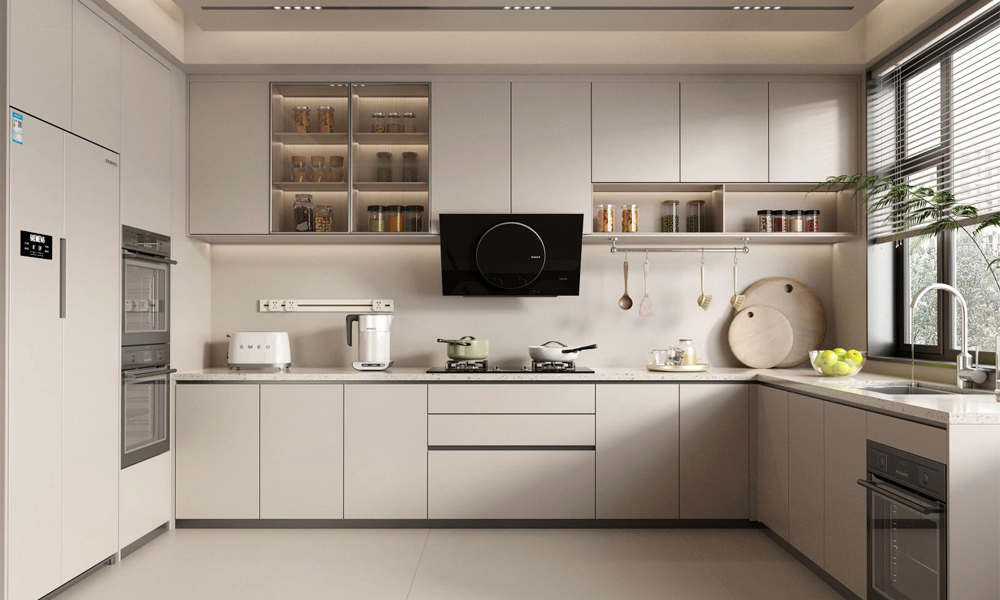
In the international kitchen cabinet trade, quality standards are one of the top concerns for global buyers. Each market has strict requirements for durability, safety, and environmental performance. At our manufacturing facility, we strictly comply with the regulations of the target export market to ensure our cabinets meet or exceed expectations.
1、North American Market (USA & Canada)
1、ANSI/KCMA Certification – Covers cabinet door durability, drawer load-bearing, and surface chemical resistance tests.
2、CARB P2 / TSCA Title VI – Limits formaldehyde emissions to ensure environmental safety and indoor air quality.
2、Australian & New Zealand Market
1、AS/NZS 4386 – Specifies structural and durability requirements for kitchen cabinets.
2、E0/E1 Formaldehyde Emission – Environmental grade standards, with E0 being the most stringent.
1、EN 14749 – Furniture strength and stability requirements.
2、FSC Certification – Ensures that all wood materials are sourced sustainably.
To ensure long-term performance and compliance with export standards, every high-quality cabinet should undergo a range of durability and safety tests. Below are the key testing items commonly applied during quality evaluation:
This test simulates daily usage scenarios such as friction from cleaning cloths, cookware contact, and accidental scratching. Using abrasion testing machines (e.g., Taber Abraser), the surface is subjected to repeated wear cycles. Results are evaluated based on color change, gloss retention, and surface integrity. High-quality laminates, UV coatings, and HPL surfaces are expected to withstand thousands of abrasion cycles without visible damage.
Since kitchens are exposed to steam, spills, and humidity, panels are tested for swelling, delamination, or warping when exposed to water or high-moisture environments. Standard tests may involve soaking samples for 24 hours or subjecting them to controlled humidity chambers. A good cabinet panel should maintain structural stability, with minimal thickness swelling (typically below 10% for moisture-resistant MDF or plywood).
Cabinets must withstand household chemicals such as detergents, oil removers, acidic cleaners, and salt solutions. In corrosion resistance testing, surfaces are wiped or exposed to specific chemical agents for a set duration. After exposure, surfaces are checked for discoloration, bubbling, peeling, or texture degradation. This test is especially critical for stainless steel hardware, PET, and lacquered finishes.
This test evaluates how much weight the shelves, drawer boxes, and hanging wall cabinets can safely support without sagging, bending, or collapsing. Typically, static loads are applied for 24 hours, followed by deformity measurements. For wall cabinets, a load safety factor is used to simulate heavy cookware storage. High-quality systems often pass loads of 30–50 kg per shelf and over 60,000 drawer opening cycles under full load.
To simulate long-term daily usage, hinges and drawer slides are tested using automated machines that repeatedly open and close them tens of thousands of times (commonly 50,000–80,000 cycles). After testing, ease of movement, noise levels, alignment, and soft-closing functionality are inspected. Premium hardware from brands like Blum, Hettich, or DTC are typically certified to pass these durability levels.
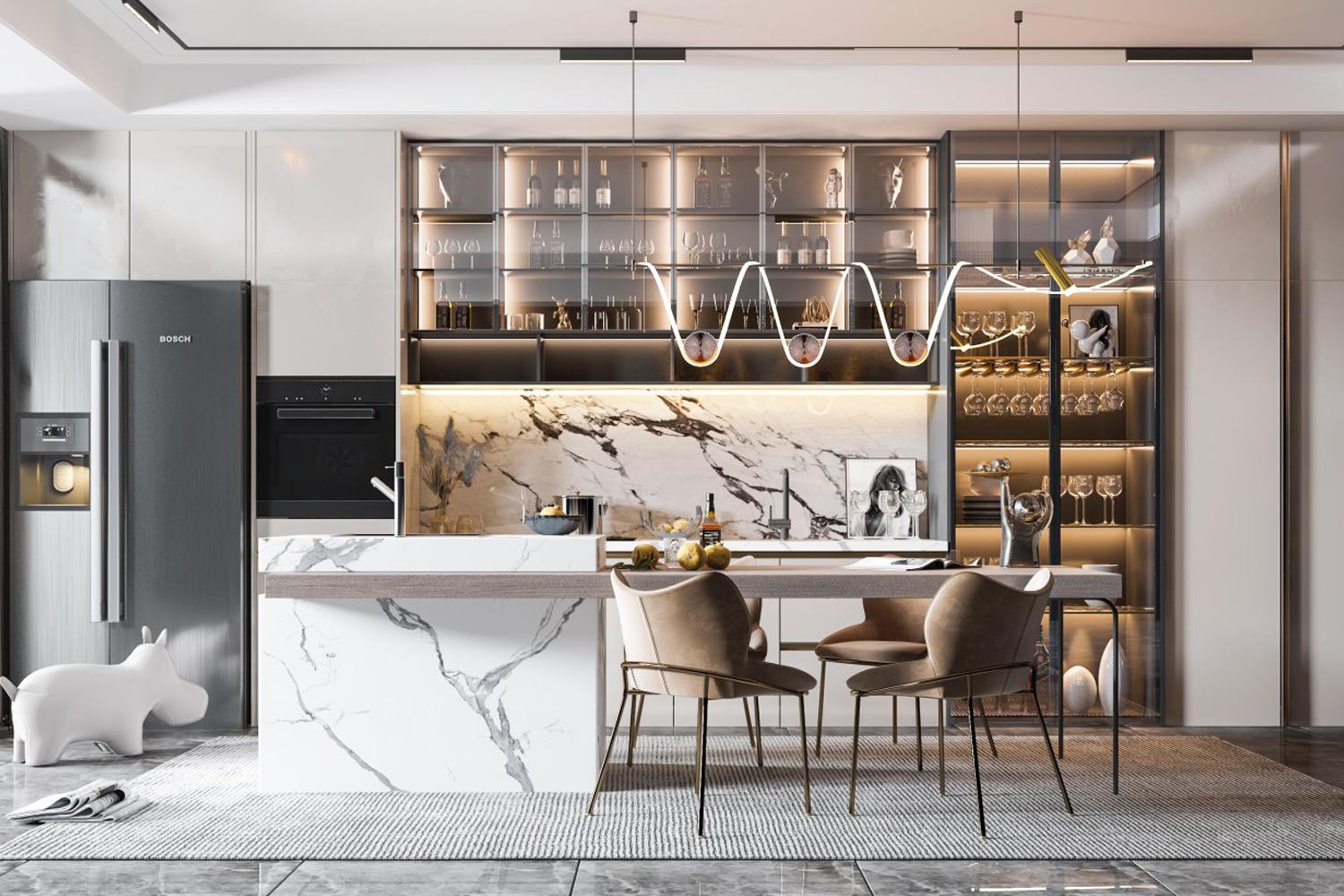
To guarantee every cabinet meets export standards and client expectations, AIS follows a four-step quality control workflow:
1、IQC — Incoming Quality Control
All incoming materials (boards, edges, hardware, finishes, adhesives) are inspected on receipt. IQC checks include visual defect screening, dimensional verification (thickness, flatness), finish code confirmation, and certificate verification (e.g., FSC, mill test reports) where required. Non-conforming batches are quarantined and logged; suppliers are notified and corrective actions recorded.
2、IPQC — In-Process Quality Control
During fabrication we perform regular, randomized checks at critical process points: CNC cutting accuracy, bore/hinge cup positions, edgebanding adhesion, glue joints, and surface finish quality after sanding. IPQC uses calibrated calipers, digital levels, and go/no-go jigs to verify tolerances (typical ±0.5 mm on hole locations). Any out-of-tolerance parts are reworked or scrapped per the disposition plan.
3、FQC — Final Quality Control
Every finished cabinet undergoes systematic inspection before assembly: door alignment, reveal consistency, hinge and slide operation (cycle tests as required), drawer glide smoothness, and surface appearance under standardized light. Functional tests (soft-close, load checks) and tactile inspections ensure both form and function meet specs. Defects are photographed, logged, and rectified before release.
4、OQC — Outgoing Quality Control
Before packing, OQC verifies the final product against the BOQ and packing list: correct SKUs, module serial numbers, protective film application, corner protection, and crate integrity. A final test report — including photos, measured tolerances, and pass/fail status — is issued with the shipment. For export orders we also verify documentation (commercial invoice, packing list, CO/FORM A or client-requested certificates).
Documentation & Traceability
Each lot is tracked via work order numbers and inspection records. We can adopt client-specific AQL sampling, bespoke checklists, or third-party inspection protocols on request.
Correction Loop
Non-conformities trigger a CAPA workflow (containment → root cause → corrective action → verification) with supplier or production owners assigned and closed only after verification.
For a luxury residential development in Toronto, Canada, we supplied a full set of custom kitchen cabinets for 46 premium units. Prior to shipment, all products underwent strict testing to meet North American quality and environmental requirements.
1、KCMA (Kitchen Cabinet Manufacturers Association) Standard – Ensures structural durability, surface resistance, and long-term cabinet performance under North American usage conditions.
2、E0 Environmental Grade – Guarantees ultra-low formaldehyde emissions, ensuring a safe, eco-friendly indoor environment for homeowners.
1、Cabinets maintained structural stability during transportation across long-distance sea freight.
2、Installers reported easy assembly due to precision drilling and stable hardware performance.
3、Seamless door alignment and smooth soft-closing mechanisms enhanced the premium experience.
4、Surface finishes (matte lacquer + woodgrain veneer) remained scratch-resistant and stain-free even after frequent use.
1、Zero reported after-sales complaints from the developer or end homeowners.
2、All drawers and hinges remained fully functional, passing real-world long-term usage.
3、No discoloration, swelling, or delamination observed, even in high-humidity kitchen conditions typical of Canadian winters.
4、The high satisfaction rate led to repeat cooperation for additional townhouse projects.
Meeting international kitchen cabinet quality standards is not just a requirement for export—it is the foundation of our brand reputation. By adhering to KCMA, AS/NZS, EN, and other market-specific regulations, and by implementing a strict multi-stage QC process, we ensure that every cabinet we deliver is durable, safe, environmentally friendly, and built to last. Whether you are a distributor, contractor, or developer, you can trust our products to meet the highest global benchmarks while maintaining competitive pricing.