Total Cabinetry And Joinery Solution
ENG

Search
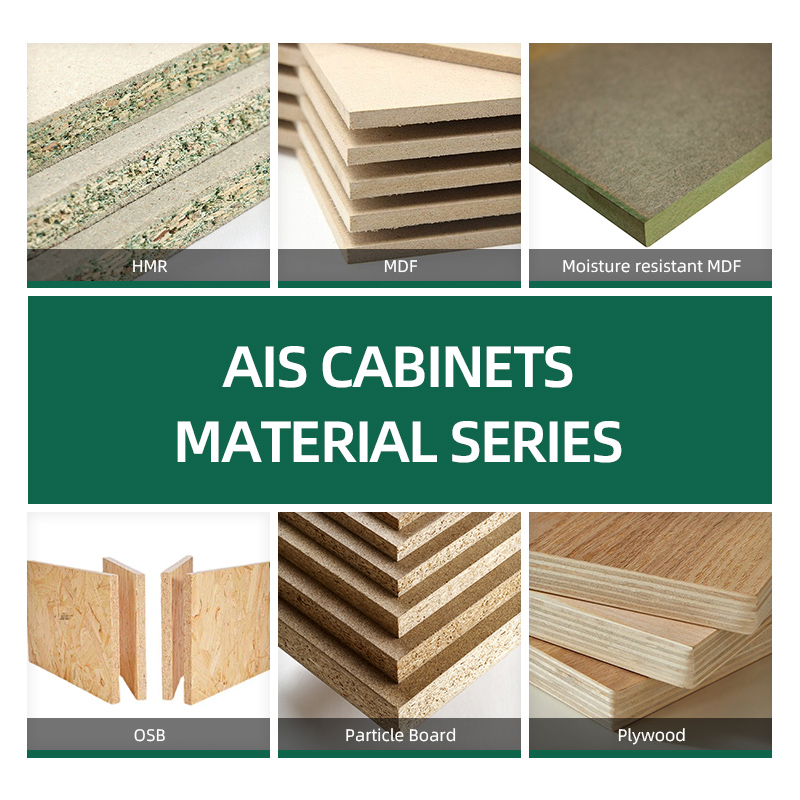
Choosing the right material is one of the most important decisions when designing kitchen cabinets. The cabinet core material directly influences durability, aesthetics, cost, and long-term performance. Among the many options available, the most common comparison homeowners and designers face is Particle Board vs Plywood vs Solid Wood Cabinets.
Each of these cabinet materials comes with its own strengths and limitations. Particle board cabinets are budget-friendly and widely used in large projects, plywood cabinets are valued for their balance of durability and cost, while solid wood cabinets deliver timeless elegance and premium quality.
In this article, we’ll take a closer look at Particle Board vs Plywood vs Solid Wood Cabinets, analyzing how they differ in terms of strength, moisture resistance, appearance, price, and best use cases. With this side-by-side comparison, you’ll be equipped to make an informed decision and choose the kitchen cabinet material that truly meets your needs.
What is it?
Made from wood chips and resin, compressed into sheets. It’s the most economical option.
Pros:
1、Lowest cost
2、Smooth surface for laminates or melamine
3、Lightweight and widely available
Cons:
1、Weak in moisture resistance
2、Not ideal for heavy loads
3、Can chip easily around edges during installation
Best for:
1、Budget-conscious projects
2、Rental properties
3、Interior carcasses (when protected from moisture)
What is it?
Multiple thin wood veneers bonded together with alternating grain directions.
Pros:
1、Stronger and more stable than particle board
2、Better water resistance
3、High load-bearing capacity
4、Available in various thicknesses and grades
Cons:
1、Slightly higher cost than particle board
2、Quality varies (make sure to choose E0 or E1 grade)
Best for:
1、Mid- to high-end homes
2、Apartments and hotel projects
3、Custom cabinetry requiring stability and longevity
What is it?
Natural hardwood cut into planks or panels, such as oak, birch, or maple.
Pros:
1、Natural grain and luxurious look
2、Extremely durable and long-lasting
3、Can be refinished over time
4、High resale value
Cons:
1、Expensive
2、Prone to expansion or contraction due to humidity
3、Requires more maintenance
Best for:
1、Luxury homes
2、High-end custom kitchens
3、Clients who value natural aesthetics
| Feature | Particle Board | Plywood | Solid Wood |
|---|---|---|---|
| Cost | ★★★★★ (lowest) | ★★★★ | ★★ (highest) |
| Durability | ★★ | ★★★★ | ★★★★★ |
| Moisture Resistance | ★ | ★★★★ | ★★★★ |
| Appearance | Depends on finish | Natural-looking | Unique wood grain |
| Eco Level | E1/E2 mostly | E0/E1 available | Natural, untreated |
Ask yourself:
1、What's your budget?
2、Is your area humid or dry?
3、Are you designing for long-term use or short-term value?
4、Do you prefer natural beauty or modern finishes?
There’s no single “best” material for every kitchen — only the most suitable one for your specific project needs. When comparing Particle Board vs Plywood vs Solid Wood Cabinets, each option serves a different purpose.
Solid wood cabinets stand out for their timeless elegance, premium texture, and long-lasting quality, making them ideal for luxury homes.
Plywood cabinets strike the perfect balance between durability and cost, offering stability in a wide range of kitchen designs.
Particle board cabinets remain the most affordable choice, suitable for large-scale projects or budget-conscious homeowners.
By carefully considering the strengths and weaknesses of Particle Board vs Plywood vs Solid Wood Cabinets, homeowners, designers, and developers can make smarter, value-driven decisions that match both functional needs and design expectations.
Your dream kitchen awaits—schedule a consultation with our master cabinet designers today.
1. What is the main difference in Particle Board vs Plywood vs Solid Wood Cabinets?
In Particle Board vs Plywood vs Solid Wood Cabinets, the core difference is the material structure:
Particle board is made from wood chips and resin pressed into sheets.
Plywood is made from thin wood veneers glued in layers with alternating grain direction.
Solid wood uses real lumber boards cut from logs.
This affects strength, moisture resistance, cost, and appearance.
2. Which material is strongest for kitchen cabinets: particle board, plywood, or solid wood?
When comparing Particle Board vs Plywood vs Solid Wood Cabinets in strength:
Solid wood is generally the strongest, but it can move (expand/contract) with humidity.
Plywood offers very good structural strength and stability, especially for cabinet boxes.
Particle board is the weakest structurally and most sensitive to water damage.
For cabinet boxes, many manufacturers prefer plywood for a good balance of strength and stability.
3. Which option is most cost-effective for cabinets?
Particle board cabinets are usually the lowest cost and work well for budget projects or rental units.
Plywood cabinets are mid to high cost, but offer better durability and perceived quality.
Solid wood cabinets are often the most expensive, especially if using premium species and full solid doors.
So in Particle Board vs Plywood vs Solid Wood Cabinets, particle board wins on price, plywood on value-for-money, and solid wood on premium look and feel.
4. Are particle board cabinets always low quality?
Not necessarily. Modern particle board cabinets can perform well when:
High-density boards are used
Edges are properly sealed
They are kept away from long-term water exposure
However, in the debate of Particle Board vs Plywood vs Solid Wood Cabinets, particle board is still more vulnerable to swelling and damage if water leaks or moisture are present.
5. Why do many manufacturers prefer plywood for cabinet boxes?
Plywood is popular because it:
Offers strong screw-holding power
Resists warping better than many solid woods
Performs well in humid environments compared to particle board
Provides a good “premium but not crazy expensive” feel
For many modern projects, plywood cabinet boxes with various door finishes are the preferred middle ground in Particle Board vs Plywood vs Solid Wood Cabinets.
6. Are solid wood cabinets always the best choice?
Solid wood looks beautiful and feels premium, but it’s not perfect:
It can expand and contract with temperature and humidity changes
It is more expensive than particle board and most plywood options
It may need more care over time
Many “solid wood cabinets” today use solid wood frames with plywood panels or plywood boxes to reduce movement and cost while keeping a real-wood look.
7. Which material is better for humid climates or near the coast?
For humid areas, moisture resistance and stability are critical:
Plywood (especially marine-grade or moisture-resistant types) usually performs better than particle board.
Solid wood must be properly sealed and designed to allow natural movement.
Particle board can swell and lose strength if exposed to long-term moisture.
In Particle Board vs Plywood vs Solid Wood Cabinets for humid climates, plywood is often the safest, most stable choice for cabinet boxes.
8. What’s best for apartments and rental units?
For apartments and rental units:
Particle board can work in budget or short-term rentals if protected from water.
Plywood is a better option for durability and fewer issues over time.
Solid wood is usually reserved for higher-end rentals or owner-occupied apartments.
If you want fewer service calls and better long-term performance, plywood cabinets are usually the best compromise.
9. What’s best for villas and high-end homes?
For villas and luxury homes:
Many owners prefer solid wood doors or veneers for a rich, natural look.
Cabinet boxes are often plywood for stability.
Particle board is rarely used in premium segments except for non-critical areas.
So in high-end Particle Board vs Plywood vs Solid Wood Cabinets comparisons, the most common combo is plywood boxes + solid wood or wood-veneer fronts.
10. Which material is best for large developer projects?
For developer and multi-unit projects:
Particle board offers very low material cost but carries higher risk if site conditions and installation quality are not well controlled.
Plywood offers a better reputation, stronger marketing value (“plywood cabinets”), and better durability for long-term use.
Solid wood is usually reserved for top-tier or upgrade packages rather than standard units.
Developers often choose plywood or good-quality particle board depending on project positioning, budget, and target buyers.
11. How do finishes interact with Particle Board vs Plywood vs Solid Wood Cabinets?
Particle board and plywood are usually hidden behind finishes such as melamine, laminate, PET, UV, or painted surfaces.
Solid wood can be stained, oiled, or painted to show its natural grain.
The core material mainly affects strength, moisture resistance, and longevity, while the finish controls the look and surface wear.
12. How should I choose between Particle Board vs Plywood vs Solid Wood Cabinets for my project?
Think about:
Budget → particle board (lowest), plywood (mid), solid wood (highest)
Durability needs → plywood and solid wood outperform particle board
Target market → rentals vs owner-occupied, mid-range vs luxury
Climate and usage → more humidity and heavy use favor plywood or solid wood