Total Cabinetry And Joinery Solution
ENG

Search
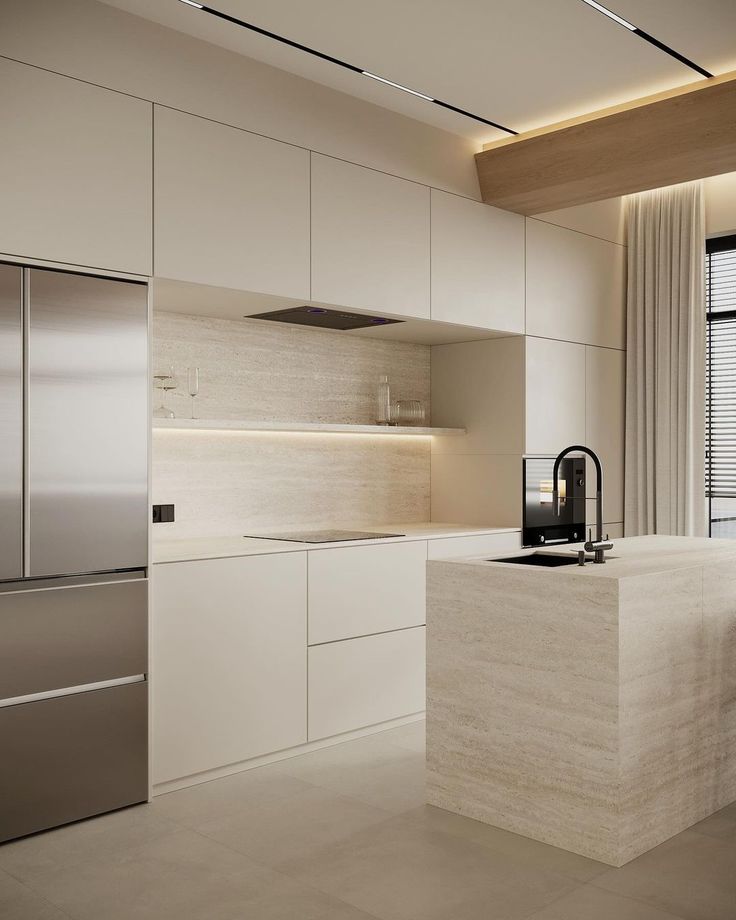
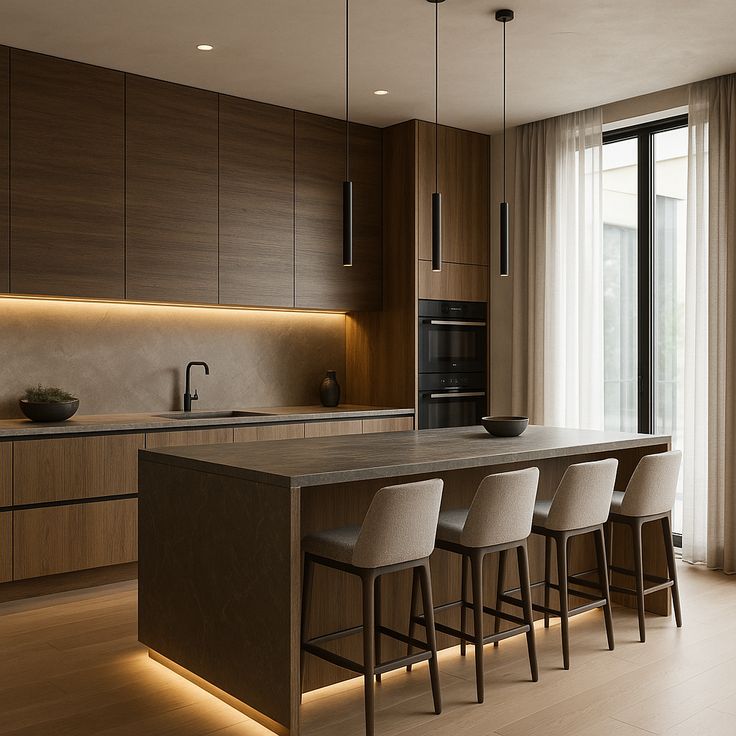
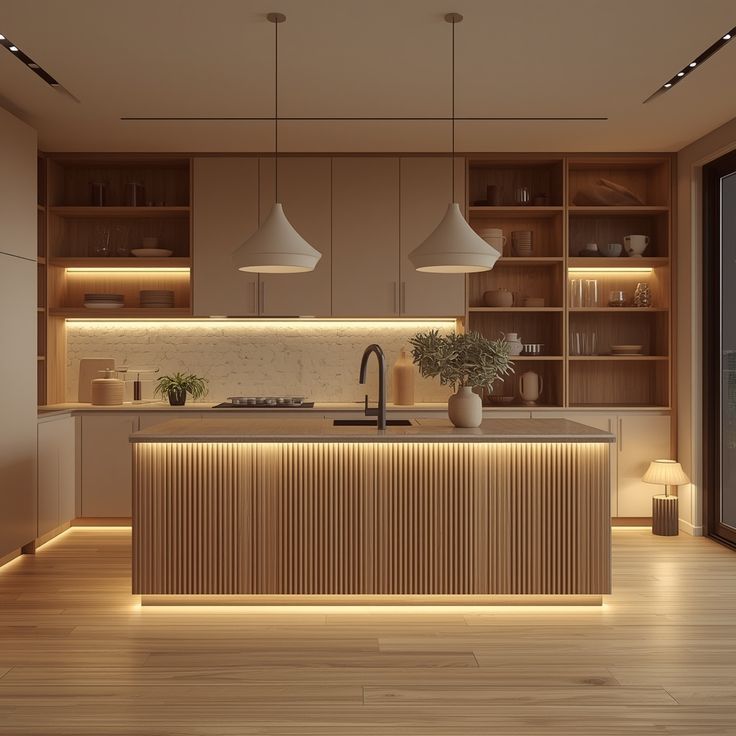
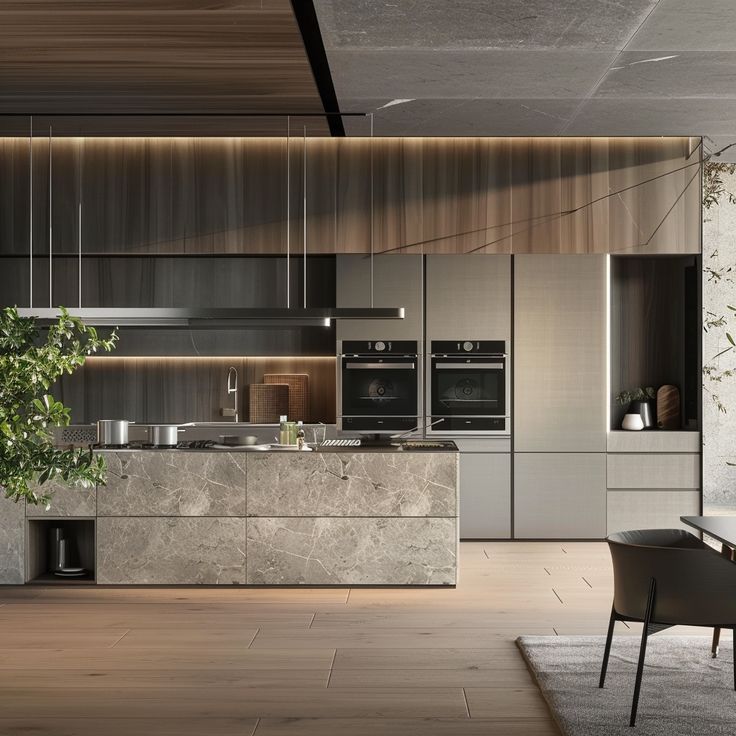
When you fall in love with the natural warmth of wood, a Timber Veneer Kitchen looks like the perfect compromise: real wood appearance, lower price, and a modern, seamless look.
But here’s what many designers don’t spell out clearly — the cost and quality of a timber veneer kitchen can vary dramatically depending on the core board, veneer thickness, edge details, and finishing system behind those beautiful doors.
This guide breaks down what’s really behind the price tag, how to judge quality, and whether a timber veneer kitchen is truly worth it for your project.
A Timber Veneer Kitchen uses real wood veneer — ultra-thin slices of natural timber — glued onto a man-made board such as MDF, plywood, or particleboard.According to independent industry guidance on what wood veneer is in cabinetry, wood veneer is made from thin slices of real timber that are glued onto flat panels such as doors, cabinets and wall cladding.
Instead of building doors and panels from solid wood, manufacturers:
Slice real timber into thin sheets (veneer)
Bond them onto engineered boards
Seal and finish the surface with clear lacquer, oil, or polyurethane
You still see and touch real wood grain, but you:
Save on material costs compared with solid timber
Get more stable, warp-resistant doors
Can achieve consistent grain matching across large kitchen runs
Before you commit to a timber veneer kitchen, it’s important to understand how it compares with other common options.For readers who want a more technical breakdown, this detailed comparison of wood veneer vs solid wood explains how both materials are used in furniture and cabinetry, and why veneer is often chosen for large flat panels.
1. Timber Veneer Kitchen
Look: Real wood grain, natural variation, premium feel
Core: MDF / plywood / particleboard with veneer on top
Cost: Mid-to-high, depending on veneer species and finish
Pros:
Real timber appearance
More stable than solid wood doors
Easier to get book-matched or continuous grain
Cons:
Surface is thin — can’t be sanded many times
Quality heavily depends on substrate and finish
2. Solid Timber Kitchen
Look: Authentic, deep grain with more “character”
Cost: Highest — especially for oak, walnut, or premium hardwoods
Pros:
Can be refinished multiple times
Very high-end perception
Cons:
Can warp or move with humidity
More sensitive to climate, especially on large flat doors
Expensive and sometimes inconsistent in color
3. Laminate / Melamine Kitchen
Look: Printed wood-effect or solid colors
Cost: Generally the most economical
Pros:
Highly durable, easy to clean
Wide color choices
Less sensitive to sunlight and moisture
Cons:
Not real wood — can look “flat”
Texture and depth are not the same as timber veneer
In short:
A Timber Veneer Kitchen sits in the sweet spot between laminate and solid wood — a balance of natural beauty, stability, and controlled cost.
When you receive a quote for a Timber Veneer Kitchen, you’re not just paying for veneer. You’re paying for the system behind it.
1. Materials: Veneer Species & Substrate
Veneer Species:
Common options: oak, walnut, ash, teak, birch, etc.
Exotic or rift-cut/quarter-cut patterns cost more.
Substrate (Core Board):
MDF: Smooth, stable, popular for painted and veneered doors
Plywood: Strong and moisture-resistant, often higher cost
Particleboard: Most economical but less moisture-resistant
Two timber veneer kitchens may look similar in photos, but one could be built on moisture-resistant MDF and high-grade veneer, while another uses low-density chipboard and thin veneer to cut cost.
2. Manufacturing & Craftsmanship
Processing a high-quality timber veneer kitchen involves:
Precision pressing of veneer to avoid bubbles and delamination
Accurate cutting so grain flows across multiple doors and drawers
Careful edge banding to hide the board and protect corners
These steps take time, machinery, and skilled workers — all of which affect cost. If one quote is much cheaper, something is usually being downgraded: veneer grade, board density, or finishing steps.
3. Hardware & Internal Fittings
Even the best timber veneer doors will feel cheap with poor hardware.
Cost is also influenced by:
Hinges & drawer runners – branded soft-close systems cost more but last longer
Pull-outs, organizers & corner systems – add convenience but increase budget
Integrated lighting – LED strips under cabinets or inside units
Many “designers” highlight the beautiful veneer, but the day-to-day experience of your kitchen is heavily shaped by the hardware you don’t see in a photo.
4. Finish & Protection
The topcoat on your veneer is critical for both durability and feel:
2K polyurethane lacquers – strong, smooth protection
Natural oils or waxes – warm, tactile, but may require more maintenance
Matt vs satin vs gloss – changes how grain and fingerprints appear
Higher-quality finishes need more sanding, more coats, and more curing time — all of which show up in the final price.
Here’s where many specifications for a Timber Veneer Kitchen become vague. If you want real quality, ask about these details.
1. Veneer Thickness
Thicker veneer (e.g., 0.6 mm or more) generally:
Feels more “substantial”
Handles small chips or light sanding better
Ultra-thin veneer saves cost but:
Is easier to damage
Offers less margin for refinishing
2. Core Board Grade
Is it standard or moisture-resistant (often marked as MR or HMR)?
Is it certified for low formaldehyde emissions (e.g., E1, CARB, etc.)?
Is plywood properly calibrated and flat?
A cheap core can lead to:
Swelling near sinks and dishwashers
Doors twisting slightly over time
Screws loosening faster
3. Edge Banding & Corners
Look closely at the edges of a timber veneer door:
Are edges veneer-wrapped or ABS/PVC-edgebanded?
Are corners clean, tight, and smooth to touch?
Do you see color difference between face veneer and edge?
Well-finished edges give a premium feel and improve moisture resistance.
4. Grain Matching & Panel Layout
High-end Timber Veneer Kitchen designs often feature:
Book-matched grain: mirror effect between panels
Sequence-matched grain: grain “flows” horizontally across multiple doors
Vertical grain for tall units, horizontal for low cabinets
This level of grain planning requires careful design and production — and it’s a sign you’re not buying the “cheapest veneer option.”
Advantages of a Timber Veneer Kitchen:
Real wood look & feel – you see authentic grain, not a printed texture
More stable than solid timber – less warping and bowing
Design flexibility – large, flat doors and sleek modern styles
Sustainable use of timber – one log can cover many more panels
Mid-to-high price band – premium look without full solid-wood cost
If sustainability is a key priority, look for suppliers who can offer FSC-certified veneer and panel products, so you know the timber comes from responsibly managed forests rather than uncontrolled sources.
Disadvantages of a Timber Veneer Kitchen:
Limited refinishing – veneer is thin; deep sanding is risky
More sensitive than laminate – needs better care around water and heat
Quality variations – cheap boards, poor veneer, or thin finishes reduce lifespan
Color change – natural timber can mellow or darken in sunlight
A Timber Veneer Kitchen might be the right choice if:
You love the look of real timber but don’t want full solid wood prices
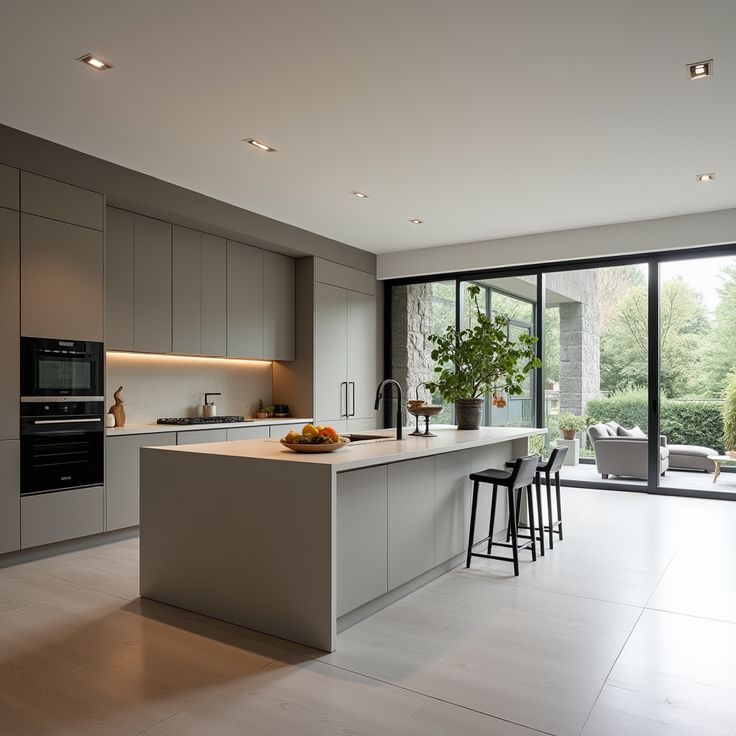
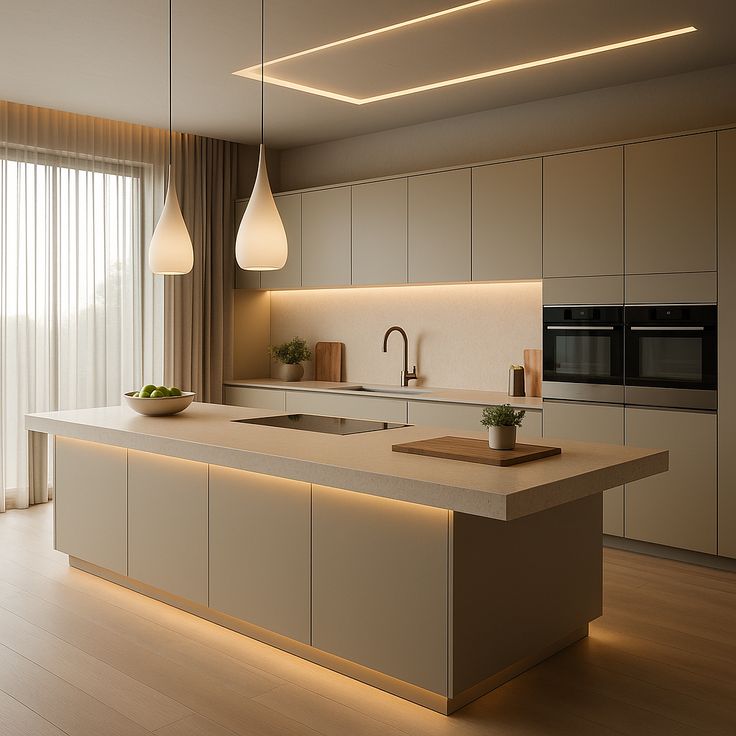
You’re designing a modern, minimalist kitchen with large flat panels
You appreciate natural variation and don’t mind some color change over time
You’re willing to invest in good hardware and finishing, not just the cheapest quote
You may want to consider laminate or melamine instead if:
The kitchen will face heavy wear-and-tear (rental units, short-term stays)
You prefer ultra-low maintenance and strong stain resistance
Budget is the absolute priority and “real wood” is less important
When comparing quotes, don’t just look at renderings or mood boards. Ask very specific questions about your Timber Veneer Kitchen:
What core board do you use?
MDF, plywood, or particleboard? Moisture-resistant or standard?
What veneer thickness and species are provided?
Is it real wood veneer, not paper or decorative film?
What finishing system do you use?
Number of coats? Type of lacquer or oil? Matt/velvet/soft-touch?
How do you treat edges and corners?
Veneer-wrapped or ABS/PVC banding? Are edges sealed against moisture?
Can you provide grain-matching across doors and drawers?
Especially important for large kitchen runs or feature panels.
What hardware brands do you use?
Soft-close hinges, drawer runners, pull-outs, lift systems.
What warranty do you offer for a timber veneer kitchen?
Coverage for peeling, delamination, or severe color defects.
A serious manufacturer or supplier will be able to answer these directly — not just say “don’t worry, it’s good quality.”
A Timber Veneer Kitchen sits in the perfect middle ground between solid timber and laminate: it gives you the warmth and authenticity of real wood, with the stability and cost control of engineered boards. When specified and manufactured properly, it can deliver a premium, modern look that still performs well in everyday use.
Whether it’s “worth it” comes down to what you value most. If you care about natural grain, a refined contemporary style, and a kitchen that feels more bespoke than basic laminate, a timber veneer kitchen is a smart investment. But it only pays off if you look beyond mood boards and ask the right questions about core materials, veneer thickness, finishing systems, and hardware quality.
Before you sign off on any design, make sure your supplier clearly explains what’s behind the surface—not just how good the renderings look. That way, your Timber Veneer Kitchen won’t just look beautiful on day one, but will stay solid, stable, and enjoyable to use for many years to come.
1. Is a timber veneer kitchen durable?
Yes, a Timber Veneer Kitchen can be very durable if it uses a good core board, thicker veneer, and a high-quality finish. However, it still needs more care than hard laminates — avoid standing water, harsh chemicals, and deep scratches.
2. Will a timber veneer kitchen peel over time?
Peeling usually happens when:
Low-grade glue or pressing is used
Edges are poorly sealed
Moisture repeatedly penetrates the board
Choosing a reputable manufacturer and moisture-resistant construction greatly reduces the risk of peeling.
3. Can a timber veneer kitchen be repaired?
Small surface scratches or chips can be:
Touched up with color pencils or repair kits
Lightly sanded and re-oiled (depending on finish)
Deep damage is harder to fix because the veneer is thin. In some cases, a door or panel may need replacing.
4. Does a timber veneer kitchen change color?
Yes, because it’s real wood. Most veneer will:
Warm up or darken slightly over time
React to direct sunlight more than shaded areas
This is normal for natural timber and is part of its character. If you want zero color change, laminate or painted finishes may be better.
5. Is a timber veneer kitchen worth the money?
If you value natural aesthetics, a modern premium look, and a real-wood feel, a Timber Veneer Kitchen is often worth the investment. The key is to avoid low-spec products and focus on core material, veneer quality, finishing, and hardware rather than just the cheapest headline price.
6. Are timber veneer kitchens water-resistant?
Timber veneer is water-resistant but not waterproof. With proper sealing and edge protection, it handles daily use well. Just avoid long-term standing water around sink areas.
7. What core board is best for timber veneer cabinets?
Moisture-resistant plywood or high-density MDF performs best. These cores reduce warping, improve stability, and help the veneer stay flat over time.
8. Can timber veneer be used for bathroom cabinets too?
Yes, but only with moisture-resistant board, sealed edges, and a high-quality finish. Regular ventilation is important. Solid wet areas (like directly above showers) are not recommended.
9. Is every timber veneer pattern unique?
Yes. Because it’s sliced from real wood, every sheet has its own grain variation. Slight color or pattern differences are normal and expected.
10. How to maintain a timber veneer kitchen?
Use a soft cloth, mild soap, and avoid abrasives. Re-oil or re-coat surfaces if the finish becomes dull (depending on the finish type). Regular gentle care keeps the veneer looking premium.